
Author name: Delight Treasure

Uncategorized

Inter-House Sports Competition 2025

Our school recently held its exciting Annual Inter-House Sports Competition, a day filled with energy, teamwork, and celebration. Students from Nursery to Secondary levels participated actively in various sporting activities, showcasing their talents and house spirit. The event promoted physical fitness, unity, discipline, and healthy competition among students. Nursery Section Participation Our Nursery pupils delighted everyone with their enthusiasm and joyful participation. The young learners took part in simple races, ball games, and fun drills designed to build coordination and confidence. Their colorful march-past display and cheerful performances brought smiles to parents, teachers, and guests. The nursery sports activities focused on participation, fun, and encouragement rather than competition. Secondary Section Participation The Secondary students demonstrated strong athletic ability and teamwork during competitive events such as relay races, long jump, high jump, and football matches. Their discipline and coordination during the march-past ceremony reflected excellent preparation and school spirit. The competition was intense but respectful, with students showing true sportsmanship and unity. Highlights of the Day The Inter-House Sports Competition was a huge success. It strengthened unity among students and promoted physical development across all class levels. We are proud of every participant and look forward to an even bigger and better sports event next year. InterHouseSports, SchoolSportsDay, NurseryParticipation, SecondaryAthletics, Teamwork, HealthyCompetition, StudentDevelopment, SchoolEvents, SportsExcellence, UnityThroughSports

Voices of Change

How One Brave teacher Turned Silence Into Voices of Hope

High in a misty mountain village, children’s laughter used to echo only in the fields — not in classrooms. Poverty had stolen their chance at education. But Ms. Lillian, a retired teacher with silver hair and a fierce heart, decided that silence had lasted long enough. She found an old bus rusting near the road and turned it into a classroom. The seats became desks, the windshield became her chalkboard, and sunlight filtered through the broken roof like rays of hope. At first, only three children came. Then ten. Then more than thirty. She taught math with bottle caps, science with pebbles, and history with stories. She told them, “Your voice is your power — don’t whisper your dreams.” Her students began writing poems about hunger, rain, and love. One poem titled “Tomorrow Has a Name” was shared on social media, and suddenly, her Wheels of Learning program became a symbol of possibility. Donations poured in. Retired teachers volunteered. The bus now travels across mountain paths, bringing education where schools never stood. When asked why she continues teaching, Ms. Lillian smiled and said, “Because silence never built a future — words did. Every child who learns to speak up plants a new world.” Her classroom on wheels now carries not just books — but a legacy. A legacy that reminds us that even in forgotten corners, voices can rise louder than any sile

Voices of Change

How a Courageous FirefighterSaved Hope Beyond the Flame world

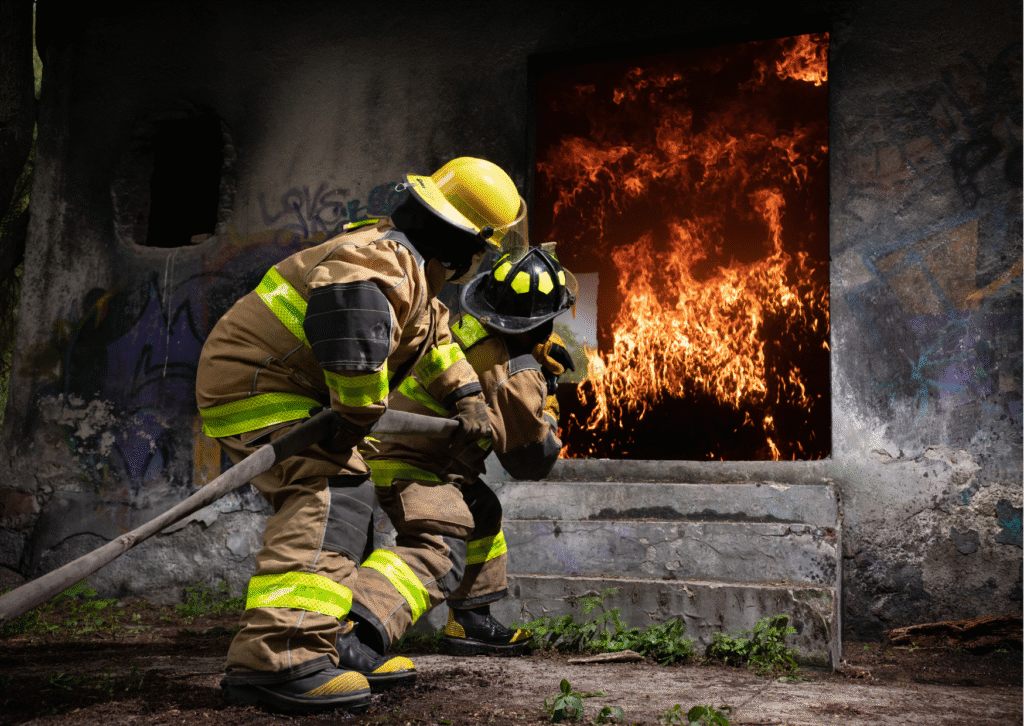
For Captain Daniel Ruiz, fighting fire was never just a job (Firefighter ) — it was a calling. For twenty-five years, he had raced into flames when others ran away. But one fire changed everything .(Firefighter ) It was the great valley wildfire — a blaze that devoured forests, homes, and hope. Daniel worked day and night for six straight days, guiding families to safety, rescuing pets, and comforting people who’d lost everything. When the smoke cleared, Daniel looked around and saw more than ashes — he saw fear. People didn’t know how to begin again. That’s when he started Project Reignite, a volunteer group built on a simple idea: “We can rebuild together.” They collected donations, rebuilt playgrounds, replanted trees, and hosted healing circles where survivors shared their stories by candlelight. One evening, Daniel stood at the center of a crowd holding candles. The burned trees glowed in the background, like silent witnesses to human strength. He said, “Fire takes things away, but people — we bring light back.” A year later, that same valley held a festival. Music echoed through rebuilt streets. Children laughed. And in every window, a candle burned for remembrance. Daniel never saw himself as a hero. “I just did what the fire taught me,” he said. “It taught me that destruction and rebirth live side by side — and we get to choose which one we nurture.”

Voices of Change

The Girl Who Planted Change in a Plastic Field

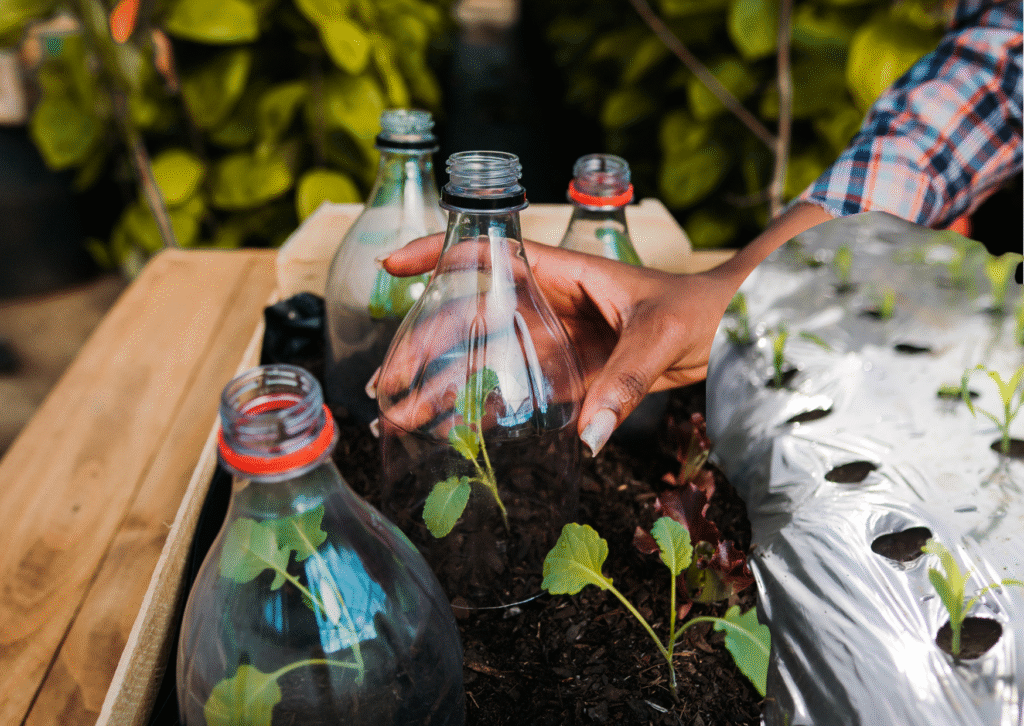
In a seaside village where the shore once glimmered with shells, piles of plastic now glittered instead. Most people had grown used to it — except twelve-year-old Aisha.(Planted ) Every day after school, she collected bottles and wrappers, dragging a bag almost bigger than herself. Her friends laughed at first, but Aisha didn’t stop. One afternoon she asked her teacher for help, and together they started the “Green Hands Club.” At first, there were five members. Then twenty. Within months, nearly the whole village joined in. They didn’t just clean the beach — they built recycling bins from driftwood and painted murals reminding visitors: “The sea remembers what we throw away.” Last summer, the local government recognized Aisha’s project as one of the region’s top youth initiatives. But when she was asked what inspired her, she said, “I didn’t want my future to smell like plastic.” Now, children from neighboring villages visit every weekend to join the cleanup. The shore shines again, and so does hope — because sometimes change begins with small hands and a big he

Hidden Histories

How a Woman’s Hidden Letters Touched Hearts Across Time

In an old attic, tucked behind stacks of yellowed newspapers and dusty photo albums, a local historian found a small wooden box labeled “To Tomorrow.” Inside were over a hundred handwritten letters — fragile, faded, but still alive with words that refused to be forgotten. They were written by a woman named Eleanor Finch between 1938 and 1952. Each envelope was sealed with care and addressed not to anyone alive — but simply to “Whoever finds this.” Her handwriting danced across the pages in loops of ink, her words gentle but powerful. She wrote about ration lines, her garden filled with marigolds, the ache of waiting for her husband to return from war, and her unshaken belief that love would outlast fear. “If you are reading this,” one letter said, “please take care of the world we only borrowed. Promise me you’ll make it kinder than we left it.” Eleanor’s letters weren’t just a diary — they were a bridge between her world and ours. She didn’t know who would read them, but she trusted that someone, someday, would. When the historian brought the box to the local museum, the curator cried. “It’s not just history,” she whispered, “it’s humanity.” The letters were soon displayed in glass cases under the title “Echoes to Tomorrow.” People lined up to read them. Some smiled, others wiped away tears. Children began writing replies and slipping them into a box beside the display, labeled “Letters Back to Eleanor.” One child’s note read: “Dear Eleanor, the world is still messy, but we’re trying. Your hope helps.” The museum now holds a yearly event called Eleanor’s Evening, where people gather to read her words aloud by candlelight. No screens, no microphones — just voices carrying her messages across decades. Historians later discovered that Eleanor was a schoolteacher who lived quietly and never published a single thing. She didn’t seek fame or recognition. She only wanted to make sure that kindness survived the storm. Her story reminds us that history isn’t always written by leaders or carved in stone. Sometimes it’s whispered in ink, sealed in envelopes, and hidden in an attic — waiting for someone to listen. So if you ever find an old letter, don’t throw it away. Read it slowly. Feel the heartbeat inside every word. Because somewhere, across time, someone like Eleanor wrote it for you.

Hidden Histories

The Powerful Forgotten Theater Beneath the City Awakens Again

Beneath the noise of traffic and modern cafés lies an old theater — The Grand Star, sealed off since the 1970s. Few people know it even exists. But when renovation workers broke through a wall last year, they found red velvet seats covered in dust, and a stage frozen mid-performance. The air smelled of dust and dreams. Posters of old plays still hung crookedly on the walls — “The Tragedy of Roses,” “Moonlight on the Hill.” Someone had written “See you next season” on the backstage mirror. But no season ever came. Through town archives, I discovered that The Grand Star had closed after a fire that never fully destroyed it — only the spirit to rebuild. For fifty years, it waited in silence beneath the city, its chandeliers still dangling, its stories unspoken. Now, artists are petitioning to restore it. “We don’t want to change it,” one said. “We want to let it breathe again.” Sometimes, the past doesn’t need rewriting — it just needs a little light.Beneath the noise of traffic and modern cafés lies an old theater — The Grand Star, sealed off since the 1970s. Few people know it even exists. But when renovation workers broke through a wall last year, they found red velvet seats covered in dust, and a stage frozen mid-performance. The air smelled of dust and dreams. Posters of old plays still hung crookedly on the walls — “The Tragedy of Roses,” “Moonlight on the Hill.” Someone had written “See you next season” on the backstage mirror. But no season ever came. Through town archives, I discovered that The Grand Star had closed after a fire that never fully destroyed it — only the spirit to rebuild. For fifty years, it waited in silence beneath the city, its chandeliers still dangling, its stories unspoken. Now, artists are petitioning to restore it. “We don’t want to change it,” one said. “We want to let it breathe again.” Sometimes, the past doesn’t need rewriting — it just needs a little light.Beneath the noise of traffic and modern cafés lies an old theater — The Grand Star, sealed off since the 1970s. Few people know it even exists. But when renovation workers broke through a wall last year, they found red velvet seats covered in dust, and a stage frozen mid-performance. The air smelled of dust and dreams. Posters of old plays still hung crookedly on the walls — “The Tragedy of Roses,” “Moonlight on the Hill.” Someone had written “See you next season” on the backstage mirror. But no season ever came. Through town archives, I discovered that The Grand Star had closed after a fire that never fully destroyed it — only the spirit to rebuild. For fifty years, it waited in silence beneath the city, its chandeliers still dangling, its stories unspoken. Now, artists are petitioning to restore it. “We don’t want to change it,” one said. “We want to let it breathe again.” Sometimes, the past doesn’t need rewriting — it just needs a little light.

Scroll to Top